
July 8, 2026 is an important date for importers of consumer products into the United States. The Consumer Product Safety Commission (CPSC) eFiling requirement has officially gone live through the PGA Message Set in ACE.
Many importers are asking the same questions: Is this real? Will CBP reject entries if CPSC data is not filed? What information should importers prepare now?
The short answer is: yes, CPSC eFiling is real. However, the official guidance does not mean every entry without CPSC PGA data will be automatically rejected on day one.
What Does the Official CSMS Mean?
The official CSMS message confirms that CPSC eFiling has moved into implementation. At the same time, it clarifies a very important point: CPSC is not requesting that CBP reject entries solely because CPSC PGA Message Set data was not submitted.
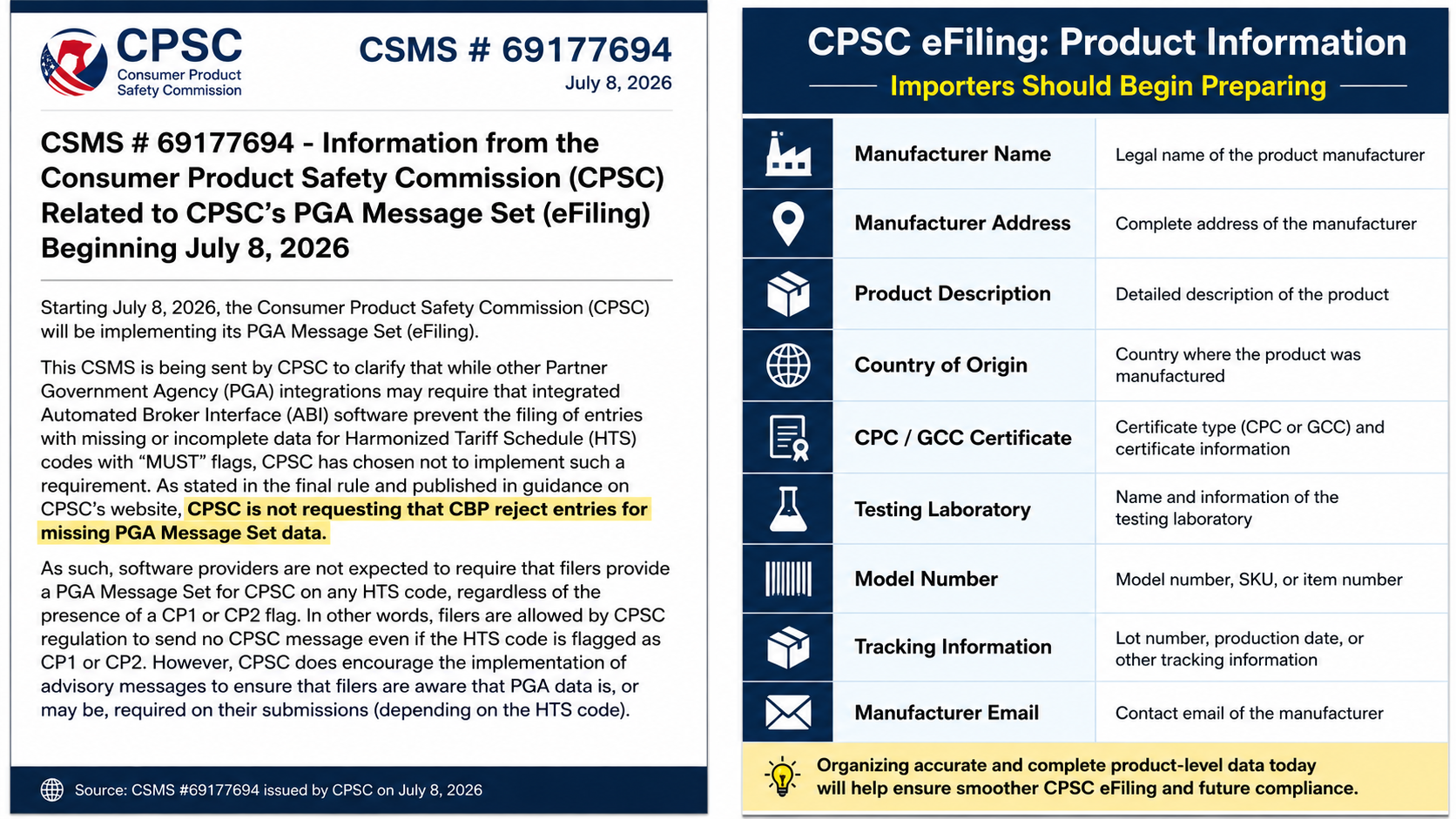
CSMS message regarding CPSC eFiling implementation on July 8, 2026.
This distinction is important. July 8 is the start of mandatory eFiling implementation for covered CPSC-regulated products, but it should not be misunderstood as an automatic entry rejection trigger for every shipment missing PGA data.
Importers should not panic. But they also should not ignore this change.
Why Product-Level Data Matters
The larger issue is not only whether an entry will be rejected today. The more important trend is that U.S. import compliance is moving from shipment-level documentation toward product-level compliance data.
Under CPSC eFiling, importers may need to organize more detailed product compliance information, such as certificate data, manufacturer information, product identifiers, testing information, and responsible entity details.
What Type of Information Should Importers Start Organizing?
Based on common CPSC Full PGA Message Set data structures, importers should begin reviewing whether they have access to product description, HTS classification, SKU, model, brand name, manufacturer information, country of origin, GCC or CPC certificate data, laboratory information, production date, lot number, tracking information, and responsible contact information.
Does This Mean CBP Will Continue to Process Entries?
According to CPSC guidance, CBP is not expected initially to reject entries solely because CPSC PGA data is missing. The system may issue warning messages rather than automatic reject messages.
However, this does not mean CPSC requirements can be ignored. CPSC may still enforce certificate requirements and take action against non-compliant products.
Conclusion
CPSC eFiling is real, and July 8, 2026 marks an important change for consumer product imports into the United States. Importers should not panic, but they should begin organizing manufacturer details, certificate information, testing records, and product traceability data now.