
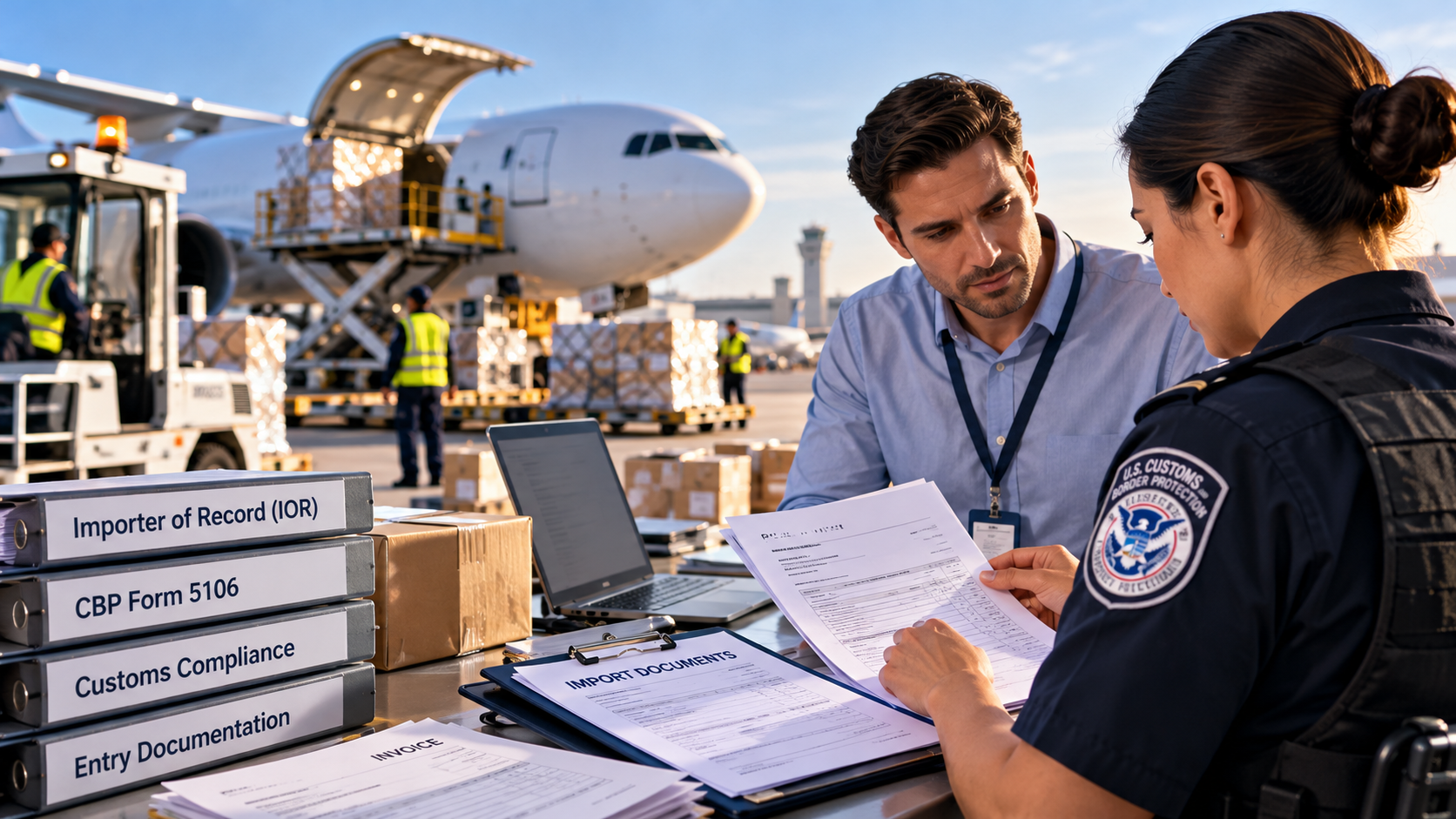
For many businesses importing goods into the United States, customs clearance may seem straightforward. Goods arrive, a customs broker files the entry, duties are assessed, and the shipment is released.
Yet one essential question sits behind every import transaction: Who is legally responsible for the goods being imported?
That question brings us to the Importer of Record (IOR). As cross-border business models become more complex, accurate IOR information is increasingly important—not only for customs clearance, but also for accountability, recordkeeping, and long-term compliance.
1. An IOR Is More Than an Importer Number
The Importer of Record is the party responsible for meeting applicable customs entry obligations. Under 19 U.S.C. 1484, the importer of record must exercise reasonable care when providing information needed to properly enter, classify, and value imported merchandise.
An importer identification number helps CBP identify the importing entity. However, possessing a number does not automatically establish that a company is the appropriate IOR for every shipment.
Businesses must distinguish between having an importer number and having the legal authority and responsibility to act as the importer of record for a particular transaction.
2. Why CBP Form 5106 Matters
CBP Form 5106, known as the Create/Update Importer Identity Form, is used to establish or update importer identity information in CBP systems.
This information may include the legal business name, importer identification number, address, contact information, and business organization details.
If a company changes its legal name, address, or other relevant identifying information, its importer records should be reviewed and updated when required.
Inaccurate or inconsistent information may lead to questions about importer identity, complicate customs processing, or create problems with bond administration and communications with CBP.
3. A Customs Broker Does Not Replace the Importer
Licensed customs brokers assist businesses with customs declarations, documentation, and regulatory procedures. Their expertise is essential to international trade.
However, appointing a customs broker does not automatically transfer the importer's legal responsibilities to the broker.
The IOR must still ensure that the information supplied for customs entry is accurate and supported by appropriate records.
Commercial invoices, product descriptions, HTSUS classifications, customs values, country-of-origin information, and importer identification should be consistent with the actual transaction.
4. U.S. Companies and Foreign Companies as Importers of Record
Both U.S. entities and eligible foreign entities may act as importers of record, depending on the transaction and applicable customs requirements.
However, a foreign company should not assume that obtaining a CBP-assigned importer number automatically satisfies every requirement to serve as an IOR.
Likewise, establishing a U.S. company does not mean that the company can be designated as the importer for any shipment without considering the underlying transaction.
Businesses should review the actual buyer-seller relationship, ownership or purchase interests, customs authorization, and bond requirements with a qualified customs broker or customs attorney.
5. Why IOR Accuracy Is Especially Important in E-Commerce
Cross-border e-commerce often involves several parties: overseas manufacturers, sellers, marketplaces, freight forwarders, customs brokers, fulfillment warehouses, and end customers.
Each party may have a different role in the transaction. The company paying the freight charges is not necessarily the importer of record. A warehouse operator or shipping-label provider is not automatically the importer either.
Before goods are shipped, businesses should identify the appropriate importing entity and make sure that commercial documents and customs filings accurately reflect the transaction.
This becomes particularly important when companies move from direct-to-consumer shipping to bulk importation, U.S. inventory storage, or domestic distribution.
6. A Practical IOR Compliance Checklist
Importers should periodically review the following:
- Is the importer's legal name correct?
- Is the importer identification number accurate?
- Does CBP Form 5106 reflect current company information?
- Is the customs broker properly authorized?
- Are the importer, buyer, seller, and consignee correctly identified?
- Are invoices, tariff classifications, declared values, and country-of-origin details accurate?
- Is the required customs bond in place?
- Are import records properly maintained?
7. Customs Compliance Is Not the Same as Customs Delay
Changes in customs compliance expectations do not necessarily mean that every shipment will face additional inspections or longer clearance times.
Cargo may continue moving through major U.S. gateways without unusual delays while importers remain responsible for accurate documentation and compliance.
Businesses should therefore evaluate operational performance and regulatory responsibilities separately.
Conclusion
The Importer of Record is not merely a name or number entered into a customs system. It represents a legally significant role in the international supply chain.
Accurate importer information, clear responsibility, and consistent documentation help businesses reduce avoidable compliance risks and support reliable import operations.
For U.S. importers, IOR accuracy is not simply an administrative requirement. It is a foundation of responsible international trade.
NovaFlow USA | Global Supply Chain Insights
Disclaimer: This article provides general industry information and does not constitute legal or customs brokerage advice.