
Introduction
Every day, thousands of shipments enter the United States without major issues. However, many shipments are delayed by U.S. Customs and Border Protection (CBP) due to documentation errors, regulatory concerns, importer identity issues, or compliance risks.
For importers, freight forwarders, customs brokers, warehouses, and logistics providers, a CBP delay can create storage fees, missed delivery appointments, customer complaints, and unexpected costs.
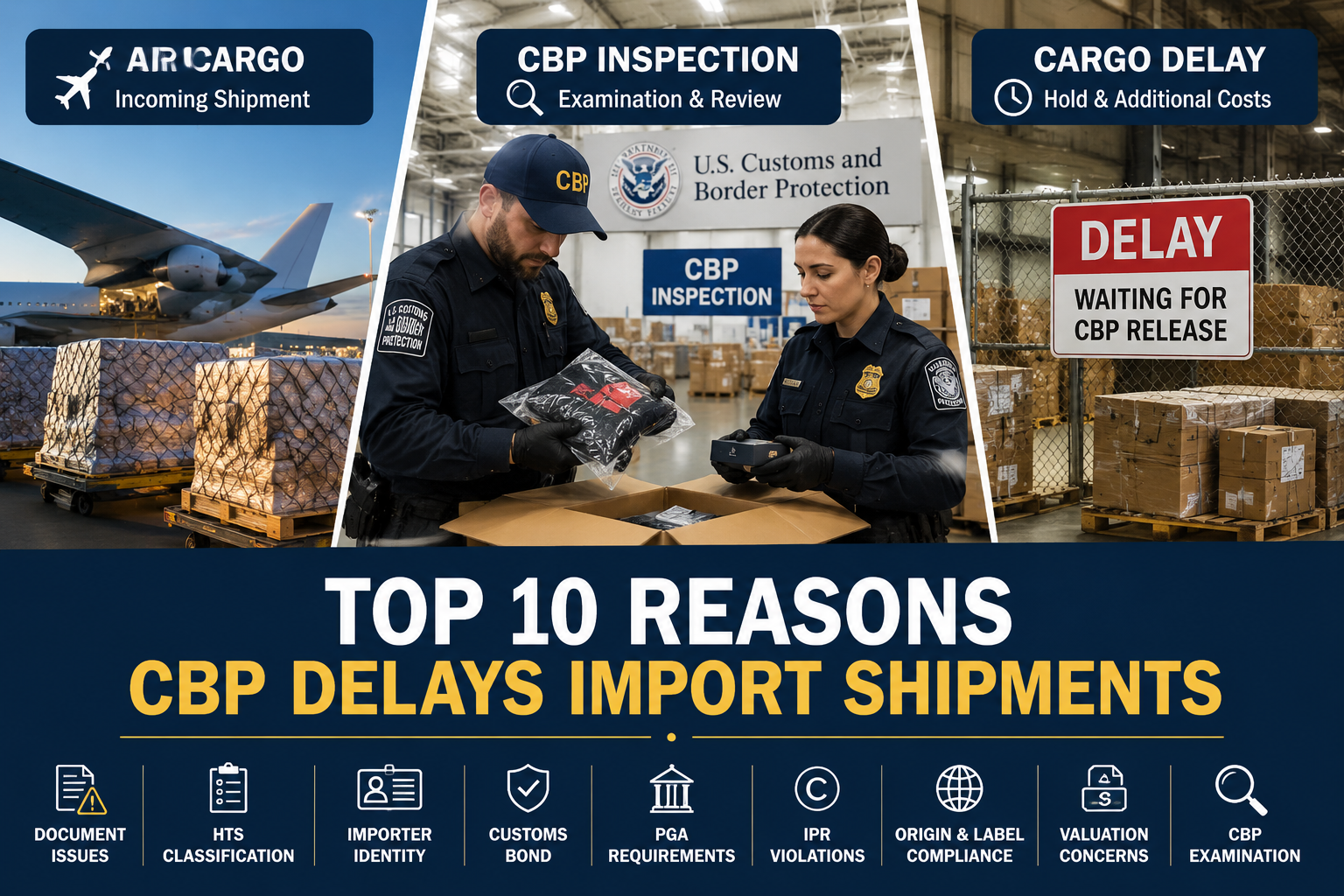
This article explains the top 10 common reasons CBP may delay an import shipment and what businesses can do to reduce the risk.
1. Missing or Incorrect Commercial Invoice
The commercial invoice is one of the most important documents in the import process. CBP uses it to review the seller, buyer, product description, quantity, value, and country of origin.
If the invoice is incomplete, too vague, or inconsistent with other documents, CBP may place the shipment on hold and request clarification.
2. Incorrect HTS Classification
Every imported product must be classified under the Harmonized Tariff Schedule of the United States. Incorrect HTS classification may lead to incorrect duty rates, PGA flags, AD/CVD concerns, or additional CBP review.
Importers should review HTS classification before shipping, especially for products with complex materials, multiple uses, or possible government agency requirements.
3. Importer Identity Problems and CBP Form 5106
CBP may delay a shipment if the importer record is missing, outdated, frozen, void, or inconsistent with the entry information.
Common issues include incorrect EIN, company name changes, address changes, or missing importer identity information. In many cases, CBP Form 5106 may be required to create or update the importer record.
4. Missing or Insufficient Customs Bond
Many commercial imports require a customs bond. If the importer does not have a valid bond, or if the bond amount is insufficient, the entry may not be processed properly.
Bond issues are especially common when import volume increases, when the importer begins bringing in regulated products, or when the importer has higher duty exposure than before.
5. FDA, CPSC, EPA, USDA, or Other PGA Requirements
Many products are regulated not only by CBP, but also by Participating Government Agencies, commonly called PGAs.
Examples include FDA for food, cosmetics, medical devices, and supplements; CPSC for children’s products and consumer goods; EPA for chemicals and environmental products; and USDA for agricultural products.
If the required information, certificates, testing reports, or product details are missing, the shipment may be delayed for agency review.
6. Intellectual Property Rights Issues
CBP actively enforces intellectual property rights, including trademarks and copyrights recorded with CBP.
Shipments may be detained or seized if products appear to be counterfeit, use protected brand names without authorization, or raise questions about trademark ownership.
Importers should confirm product authenticity and authorization before shipping branded goods to the United States.
7. Country of Origin Marking Problems
Most imported products must be marked with the correct country of origin, such as “Made in China,” “Made in Vietnam,” or “Made in Mexico.”
If the marking is missing, incorrect, hidden, or misleading, CBP may require correction, remarking, exportation, or other action before release.
8. Product Labeling Violations
Some products require specific labels beyond country of origin marking. Examples include textile labels, children’s product tracking labels, warning labels, FDA labels, and consumer safety labels.
Incorrect or missing labels can result in CBP holds, PGA review, or refusal of entry.
9. Suspicious Valuation or Undervaluation
CBP may review shipments when the declared value appears unusually low or inconsistent with the product type, quantity, or market price.
CBP may request purchase orders, payment records, proof of transaction value, related-party information, or other documents to verify the declared value.
10. CBP Examination or Random Inspection
Not every delay means there is a compliance violation. CBP may select shipments for X-ray examination, intensive examination, agriculture examination, or random inspection.
Even when all documents are correct, these inspections may delay release and create additional warehouse or examination fees.
Conclusion
CBP shipment delays can be caused by many different issues, including documentation problems, importer record issues, customs bonds, PGA requirements, intellectual property concerns, country of origin marking, labeling, valuation, and inspections.
The best way to reduce risk is to prepare accurate documents before shipment, confirm importer information, review HTS classification, check PGA requirements, and work with experienced customs brokers and logistics professionals.
For importers and freight forwarders, compliance should not begin after the cargo arrives. It should begin before the shipment leaves the origin country.