
Introduction
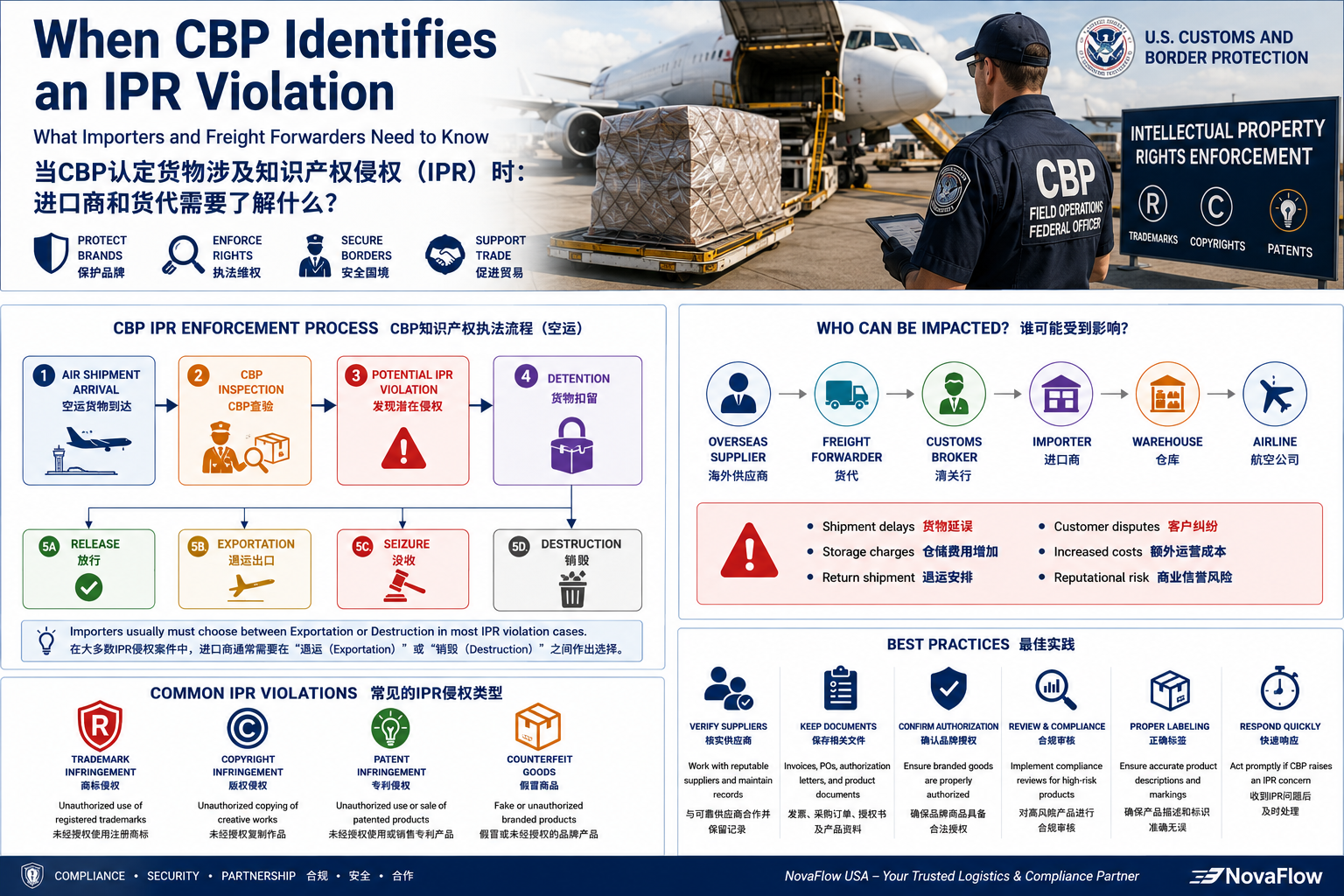
Intellectual Property Rights (IPR) enforcement is an important part of U.S. Customs and Border Protection (CBP) operations. Every year, CBP detains, seizes, exports, or destroys shipments that are suspected of violating trademarks, copyrights, patents, or other intellectual property protections.
Many importers and freight forwarders believe that IPR violations are solely the responsibility of the buyer or seller. However, when CBP identifies a potential IPR issue, multiple parties throughout the supply chain may become involved in resolving the situation.
Understanding how the process works can help businesses avoid costly delays, additional storage fees, and unnecessary compliance risks.
What Is an IPR Violation?
An Intellectual Property Rights violation generally involves the unauthorized use of protected intellectual property. Common examples include:
- Counterfeit products bearing unauthorized trademarks
- Trademark infringement
- Copyright infringement
- Patent infringement
- Unauthorized use of protected brand names, logos, or packaging
While counterfeit goods receive the most attention, IPR enforcement extends beyond fake products and may involve a wide range of intellectual property concerns.
How Does CBP Identify Potential IPR Violations?
Risk Assessment and Targeting
CBP reviews shipment information, importer history, product descriptions, and country-of-origin data to identify high-risk shipments.
Physical Examination
Selected shipments may be physically examined by CBP officers at ports of entry.
Trademark Recordation Programs
Many brand owners record their trademarks with CBP, allowing officers to compare imported products against registered intellectual property information.
Rights Holder Assistance
CBP may consult intellectual property owners or their representatives to help determine whether goods are genuine or infringing.
What Happens After CBP Flags a Shipment?
Detention
CBP may temporarily detain the shipment while conducting further review.
Examination
Additional inspections may be conducted to verify product authenticity.
Seizure
If CBP determines that the goods violate intellectual property laws, the shipment may be seized.
Exportation
In certain situations, the importer may be permitted to export the goods out of the United States.
Destruction
Certain infringing products may be destroyed under CBP supervision.
In many real-world cases, importers ultimately face two practical options: exportation or destruction of the affected merchandise.
Why Freight Forwarders Should Pay Attention
A common response from logistics providers is:
“I did not purchase the goods. I only transported them.”
While freight forwarders are often not the party directly responsible for the intellectual property violation itself, they may still become involved in the resolution process.
Potential impacts include:
- Shipment delays
- Additional storage charges
- Return shipment coordination
- Customer disputes
- Increased operational costs
- Reputational risk
When an IPR issue arises, freight forwarders frequently become the communication bridge between importers, customs brokers, warehouses, carriers, and overseas suppliers.
Best Practices for Importers and Logistics Providers
Verify Suppliers
Work with reputable suppliers and maintain complete supplier records.
Maintain Supporting Documentation
Keep invoices, purchase orders, authorization letters, and product documentation readily available.
Confirm Brand Authorization
Verify that products bearing trademarks or branded packaging are properly authorized.
Implement Compliance Reviews
Conduct internal reviews for high-risk products and unfamiliar suppliers.
Respond Quickly
If CBP raises an IPR concern, respond promptly and cooperate with customs brokers and legal advisors.
Conclusion
IPR violations can affect far more than the importer alone. When CBP identifies potential trademark, copyright, or patent infringement, multiple parties throughout the supply chain may be impacted.
By understanding the enforcement process and implementing proactive compliance measures, importers and logistics providers can reduce delays, avoid unnecessary costs, and better protect their business operations.